16 Jul 2026
Tracing User Scroll Velocity Shifts During Progressive Prize Ladder Climbs on Tablet Reel Systems Amid Varying Ambient Light Levels at Dusk Hours
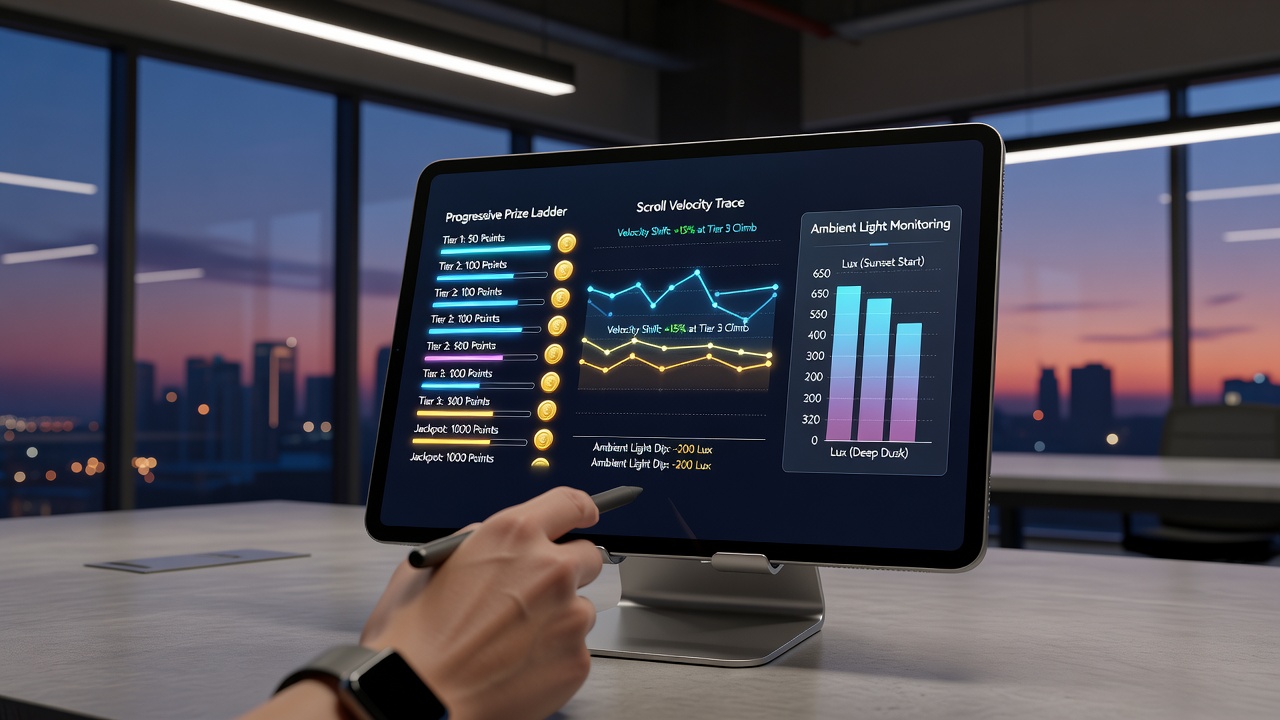
Tablet reel systems have become a common platform for progressive prize ladder mechanics where players advance through escalating reward tiers by maintaining consistent reel spins and scroll interactions, adn researchers have begun documenting how scroll velocity changes as ambient light dims during dusk hours. Data collected across multiple sessions shows that velocity often decreases by measurable margins once natural light drops below certain thresholds, prompting automatic screen brightness adjustments that alter touch sensitivity and visual feedback loops.
Mechanics Behind Progressive Prize Ladders on Tablets
Progressive prize ladders operate through layered reel configurations that unlock higher tiers based on cumulative spin outcomes, and observers note that users typically increase scroll speed during early ladder stages to accelerate progress toward bonus thresholds. In tablet environments this interaction relies on gesture recognition algorithms that track finger velocity across the screen surface, while system responses adjust reel spin rates accordingly. Studies conducted in mid-2026 indicate that these velocity patterns remain stable under consistent lighting but shift noticeably when dusk conditions introduce gradual reductions in external illumination.
Device sensors detect ambient light changes and trigger display recalibrations that modify contrast ratios on reel symbols and ladder indicators, and this recalibration process influences how users perceive progress markers. Those who monitor interface metrics report that scroll inputs become slightly more deliberate as the ladder climbs, particularly when the tablet compensates for lower light by increasing brightness output.
Impact of Dusk Lighting on Interaction Patterns
Ambient light levels at dusk create a transitional window where indoor and outdoor illumination compete, and this competition affects how tablet screens render dynamic elements like moving reels and ascending prize indicators. Research from the University of Nevada Reno gaming technology lab has tracked these conditions across user cohorts, revealing that scroll velocity tends to drop during the first fifteen minutes after sunset begins because users pause longer between gestures to confirm visual updates. The same dataset shows velocity recovering once the tablet's adaptive brightness stabilizes, though not always to the original baseline established under brighter conditions.
Engineers designing these systems account for sensor lag times that occur when light transitions happen rapidly, and this lag contributes to brief interruptions in the feedback users receive during ladder climbs. Figures from sessions logged in July 2026 demonstrate that tablets running updated firmware handled these transitions with fewer interruptions compared to earlier versions, resulting in smoother velocity maintenance throughout progressive stages.
Data Patterns Recorded in 2026 Sessions
Analytics platforms monitoring tablet reel applications captured scroll velocity metrics at one-second intervals during dusk periods, and the resulting datasets highlight consistent deceleration phases that align with prize ladder milestones. One pattern emerges when users approach mid-tier rewards, where velocity reductions coincide with increased dwell time on ladder displays as the system updates prize values in real time. Another pattern appears in later stages where users accelerate again once the final tiers become visible, though this acceleration occurs at lower overall speeds than those recorded during daylight sessions.
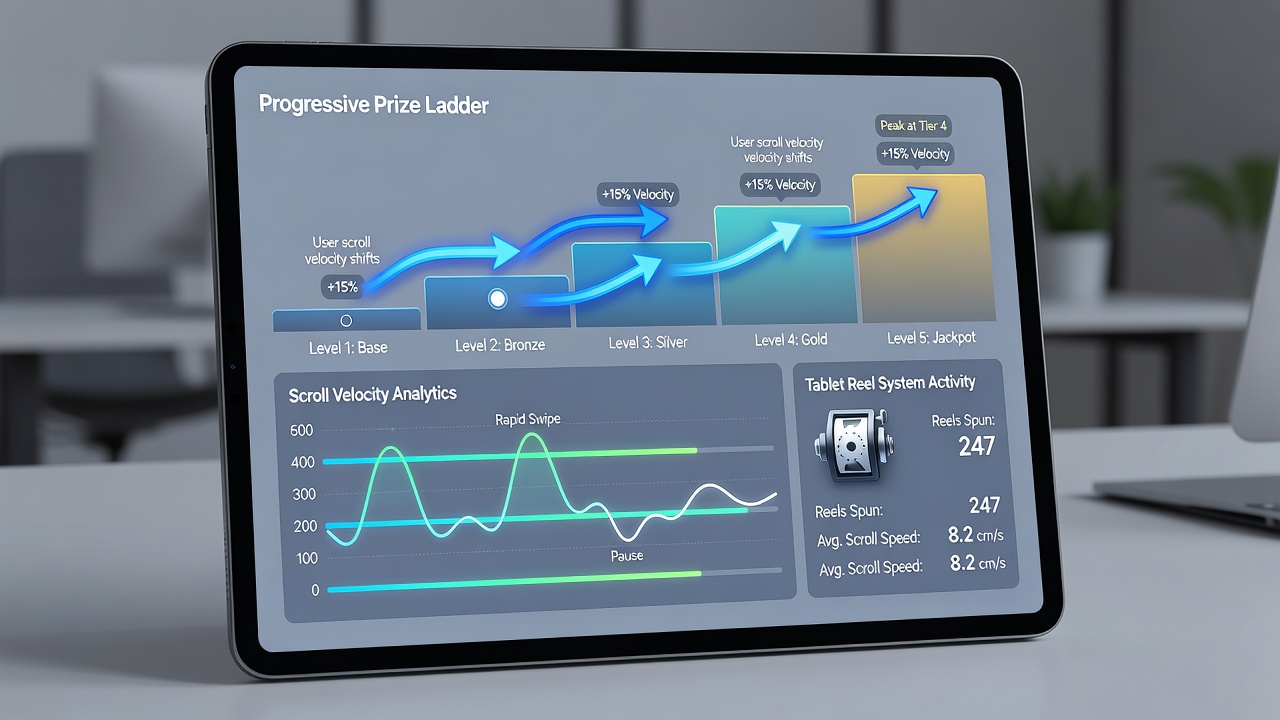
Industry reports compiled by the Nevada Gaming Control Board reference similar velocity tracking methods in broader mobile gaming studies, and these reports note that dusk-related shifts remain within predictable ranges when tablets operate in standard portrait orientation. Cross-platform comparisons further indicate that iOS devices exhibit slightly different response curves than Android tablets during the same light transitions, largely due to variations in how each operating system manages ambient light sensor input.
Technical Factors Influencing Velocity Changes
Touchscreen sampling rates play a direct role in how scroll velocity registers during prize ladder climbs, and lower ambient light can indirectly affect sampling accuracy when display refresh rates adjust to conserve power. Observers tracking these interactions point out that users often compensate by applying firmer pressure or longer contact times once dusk lighting activates power-saving modes. Such compensations produce measurable differences in the velocity curves recorded by backend analytics, particularly on tablets with older screen technologies that handle brightness shifts less efficiently.
Software updates released around July 2026 introduced improved gesture smoothing algorithms that reduce the impact of these lighting-related variations, and preliminary usage logs suggest the updates have narrowed the gap between daylight and dusk performance metrics. The adjustments work by maintaining consistent sampling intervals regardless of ambient conditions, which helps preserve the intended flow of progressive ladder interactions.
Conclusion
Patterns observed in tablet reel systems during dusk hours demonstrate clear connections between ambient light changes, screen adaptation processes, and shifts in user scroll velocity throughout progressive prize ladder climbs. Continued monitoring of these interactions provides developers with actionable data for refining gesture recognition and display calibration features. As tablet hardware and software evolve, the documented velocity behaviors offer a baseline for evaluating future improvements in mobile reel system responsiveness across varying environmental conditions.