18 May 2026
The Hidden Mechanics of Bonus Code Redemption Sequences Across Multi-Device Gambling Sessions

Bonus code redemption sequences operate through layered backend protocols that link user accounts across smartphones, tablets, and desktop browsers. These systems rely on device fingerprinting combined with account-level identifiers to maintain continuity during cross-device gambling sessions. Operators deploy these mechanics to enforce bonus terms while monitoring for patterns that suggest coordinated redemptions.
Core Components of Redemption Tracking
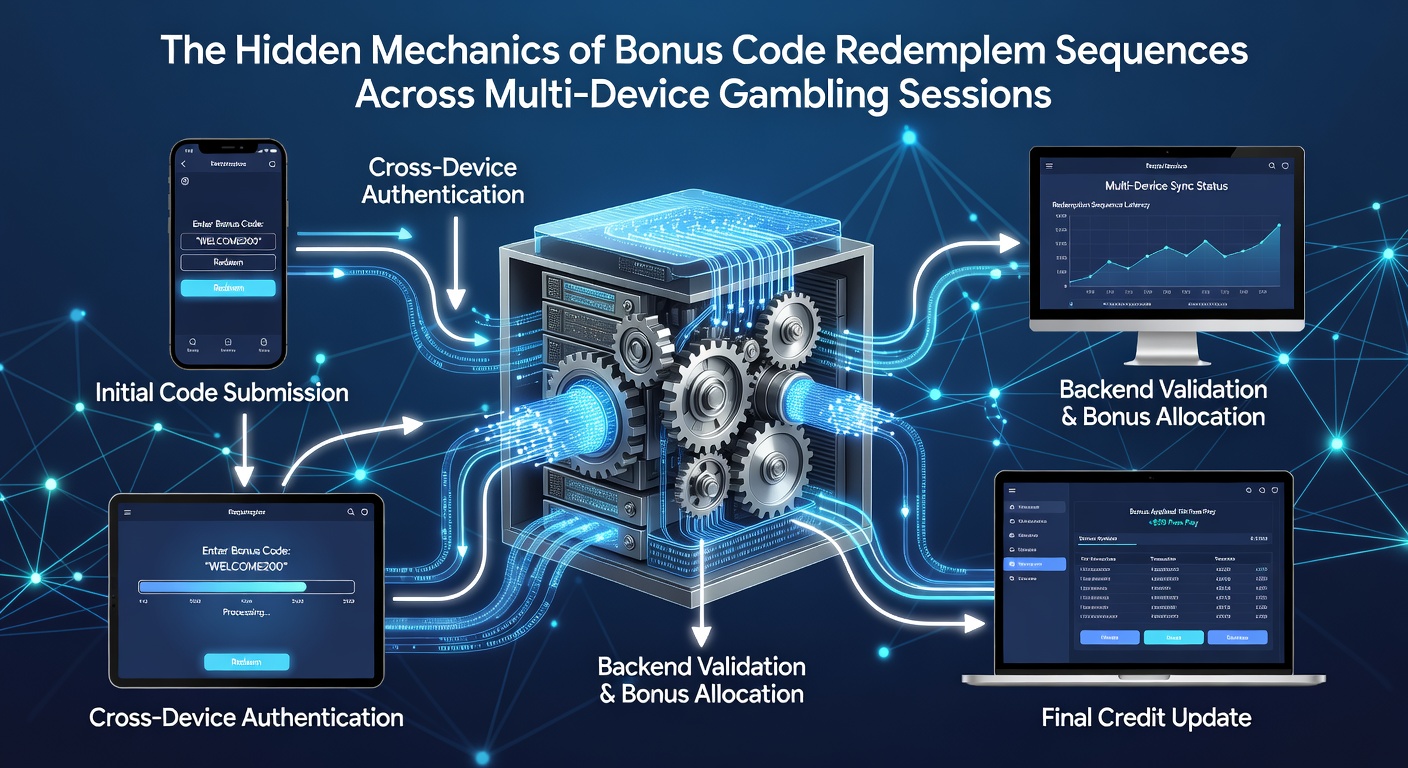
Redemption begins when a player enters a code into an active session interface. The platform immediately queries a central database that records the code against the player's registered account and the current device signature. This signature incorporates browser attributes, operating system details, and network parameters. When the same player switches to another device, the sequence continues only if the account credentials match and the new device passes verification checks against prior entries.
Research from the New Jersey Division of Gaming Enforcement shows that operators log each redemption event with timestamps and device metadata. These logs feed into algorithms that detect rapid successive redemptions across multiple endpoints within short windows. The process prevents single codes from activating repeatedly through device rotation alone.
Device Fingerprinting and Session Continuity
Modern platforms combine several signals to create persistent profiles. IP address ranges, canvas rendering data, and installed font lists contribute to unique identifiers that persist even when cookies are cleared. As sessions migrate from mobile apps to web browsers, the system cross-references these markers with login tokens issued at account creation.
Studies conducted by the University of Nevada, Reno gaming research group indicate that fingerprint stability reaches 92 percent accuracy across typical player device switches. This stability allows redemption sequences to resume without requiring players to re-enter codes on each new device. Yet operators impose cooldown periods between redemptions to limit exploitation of the same promotional offer.
Sequence Validation Rules in Practice
Validation follows a defined order. First the code authenticity check runs against the active promotion database. Next the system verifies that the player has not exceeded daily or lifetime redemption limits attached to that code. Finally geolocation data confirms compliance with jurisdictional restrictions. Only after these steps complete does the bonus credit post to the account balance.
During May 2026 operators updated many of these validation layers to incorporate behavioral biometrics. Mouse movement patterns on desktops and touch pressure data on mobile devices now supplement traditional fingerprinting. These additions reduce false positives when legitimate players switch devices mid-session.
Regulatory Influences on Multi-Device Mechanics
Regulatory frameworks in different regions shape how redemption sequences function. The Nevada Gaming Control Board requires operators to maintain audit trails that capture every device transition tied to bonus activity. Similar requirements appear in Canadian provincial frameworks administered by iGaming Ontario, where data retention periods extend for a minimum of five years.
These rules create standardized reporting formats that platforms must support. When a player redeems a code on one device and continues play on another, the complete sequence appears as a single chained record in compliance exports. This structure simplifies oversight while preserving session fluidity for players.
Technical Implementation Across Platforms
Backend services handle the heavy lifting through API calls between the front-end client and central servers. Each call transmits hashed device tokens rather than raw identifiers to maintain privacy standards. When a session transfers, the receiving device requests the current redemption state using the player's authentication token. Servers respond with remaining eligibility flags and any pending bonus stages.
Operators also deploy rate-limiting at the network level. Excessive redemption attempts from rapidly changing IP addresses trigger temporary holds. These holds appear more frequently in regions with strict player protection mandates, such as those enforced by the Australian Communications and Media Authority.
Conclusion
Bonus code redemption sequences across multiple devices depend on integrated fingerprinting, timed validation steps, and regulatory audit requirements. Data from multiple jurisdictions demonstrates that these systems continue to evolve with added biometric layers and refined logging protocols. The resulting framework supports legitimate play while enforcing the boundaries set by each promotional offer.