22 Jun 2026
Seasonal migration patterns reshaping live dealer table selection habits in cross-timezone mobile sessions

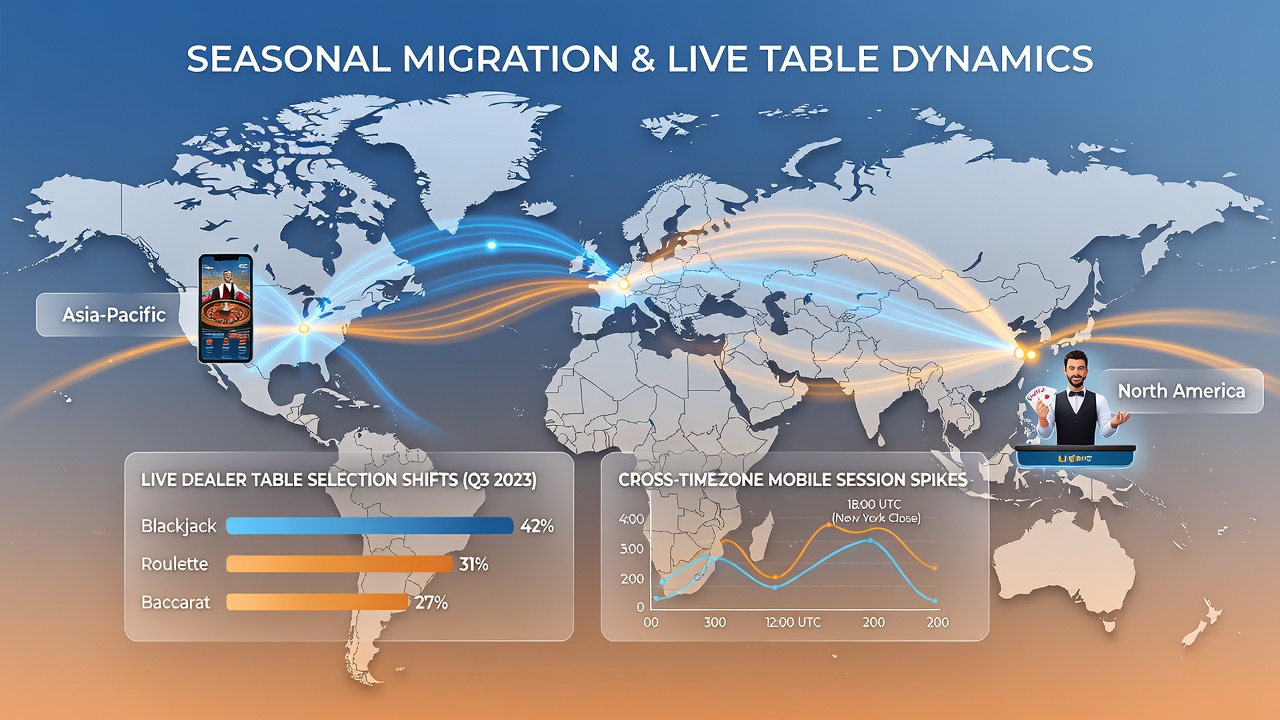
Seasonal migration patterns have begun influencing how mobile users select live dealer tables, particularly when players cross time zones during extended travel periods. Data from platform analytics firms shows that shifts in user location correlate with changes in preferred game start times and dealer regional availability. Researchers tracking these movements note that summer months often see increased activity from users relocating temporarily, which in turn alters the hours when certain blackjack and roulette tables draw the most participants.
Mapping player movement across regions
Analysts at the American Gaming Association have documented how vacation-related travel creates predictable spikes in cross-border mobile sessions, with users in transit favoring tables hosted by dealers operating in overlapping daylight hours. For instance, individuals moving from North American locations to European destinations during June 2026 adjusted their connection windows to align with dealer shifts in the Mediterranean time zone rather than sticking to their home schedules. This adjustment pattern emerges because mobile interfaces display real-time availability, allowing users to filter tables by dealer location and language options that match their new surroundings.
Timezone alignment and table popularity
Live dealer platforms record higher engagement on tables where dealers work during local evening hours for traveling users, a trend confirmed through aggregated session logs from multiple operators. When players enter new time zones, their selection habits pivot toward games featuring dealers whose shifts coincide with the user's adjusted circadian rhythms, reducing wait times and increasing interaction frequency. Observers note that roulette tables with French-speaking dealers gain traction among users migrating southward in warmer months, while blackjack variants hosted in Asian-Pacific studios attract northward travelers seeking late-night options.
Studies conducted by gaming research groups indicate that these preferences stabilize within 48 to 72 hours of arrival in a new region, after which users maintain consistent table choices until their return journey begins. The same datasets reveal that return migrations during fall periods produce a reversal effect, with users reselecting tables aligned to their original home time zones.
Data patterns from recent travel cycles
Figures compiled by the Canadian Gaming Association during peak summer travel windows demonstrate that mobile live dealer sessions increase by measurable margins when users cross multiple time zones, with selection clustering around tables that offer continuous dealer rotations. These clusters form because platforms provide filters for dealer availability that adapt automatically to detected device locations, guiding users toward options that fit their temporary schedules. One analysis of June 2026 activity showed elevated traffic on tables staffed during overlapping business hours for travelers moving between the Americas and Asia-Pacific regions.
What's interesting here is how regulatory frameworks in different jurisdictions affect these patterns, since operators must comply with varying licensing requirements that influence dealer staffing schedules. Users crossing into areas with stricter operational rules encounter altered table availability, prompting them to migrate their selections to alternative studios within the same platform ecosystem.
Platform adaptations to migration trends
Operators respond to these seasonal flows by expanding dealer networks in regions that align with common travel corridors, ensuring that popular table types remain accessible regardless of user location changes. Mobile applications now incorporate geolocation signals to suggest tables based on current time zone, a feature that emerged after internal testing revealed improved retention when recommendations matched user movement data. Industry reports from the European Gaming and Betting Association highlight similar adjustments across multiple markets, where seasonal influxes of mobile users drive operators to schedule additional dealer shifts during peak migration months.
Those who've examined session duration metrics find that cross-timezone players tend to engage longer when tables match their relocated routines, leading platforms to prioritize staffing in high-demand windows identified through repeated travel cycles. This adaptation occurs without altering core game rules, focusing instead on availability and language support that accommodates shifting user bases.
Conclusion
Seasonal migration continues to influence live dealer table selection by prompting users to recalibrate their preferences according to new time zones and regional dealer availability. Platform data collected through 2026 illustrates consistent patterns where mobile sessions realign with dealer schedules that reflect temporary user locations. These dynamics underscore how travel behavior intersects with gaming infrastructure, producing measurable shifts in participation that operators track through location-aware analytics. As migration cycles persist, table selection habits will likely evolve in tandem with broader movement trends across global user bases.