20 Jul 2026
Seasonal Deposit Timing Patterns That Shift Slot Tournament Qualification Thresholds in Regional Mobile Networks
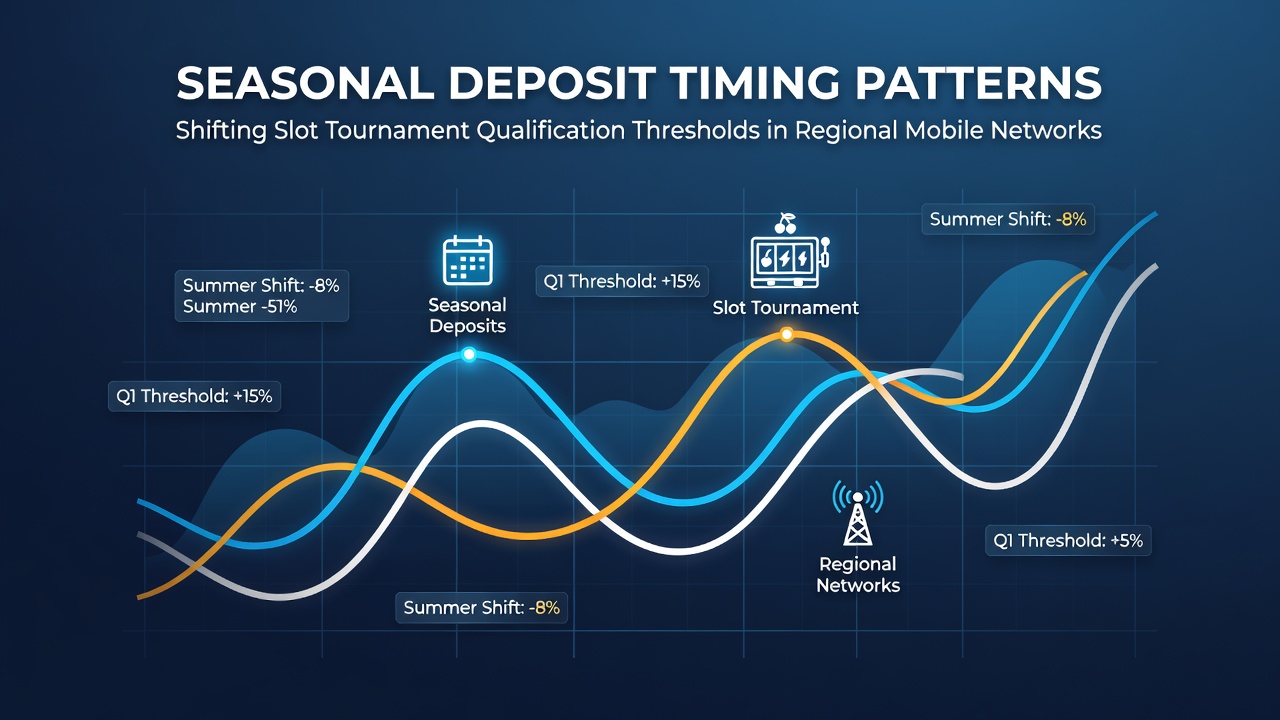
Regional mobile networks show clear seasonal fluctuations in deposit timing that directly alter qualification thresholds for slot tournaments, and operators adjust entry requirements accordingly based on observed player volume changes. Data collected across multiple jurisdictions reveals that deposit spikes during certain months compress or expand the number of players who meet minimum criteria, forcing platforms to recalibrate thresholds in real time. These adjustments occur most noticeably in networks serving North American and Asia-Pacific markets where mobile gaming traffic follows predictable calendar cycles.
Deposit Volume Cycles Across Calendar Periods
Analysts tracking transaction logs find that deposit activity rises sharply in the weeks leading into major holidays and dips during post-holiday recovery periods, while mid-year months produce steadier but lower overall volumes. Mobile operators respond by raising qualification thresholds when deposits surge because more players reach the required activity levels, and they lower thresholds when activity contracts to maintain tournament field sizes. Figures from network operators indicate that average daily deposits in December often exceed January totals by 35 to 50 percent depending on the region, and these swings translate into threshold movements of similar magnitude.
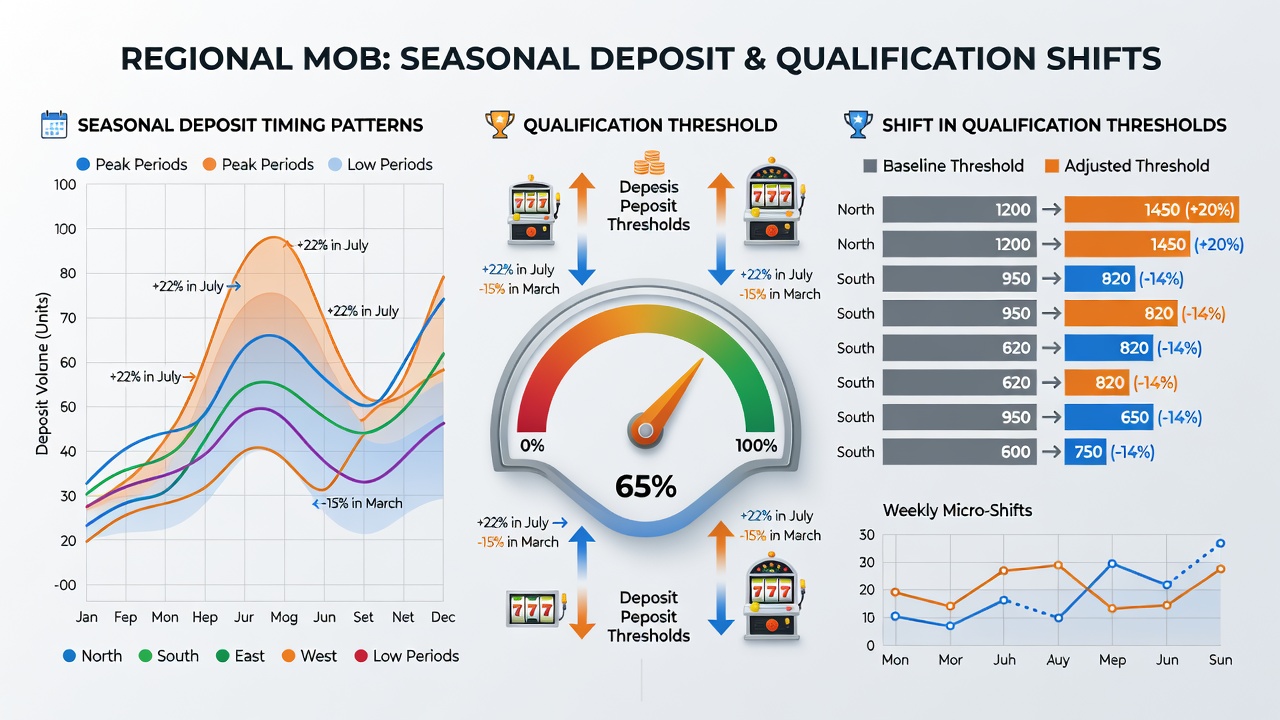
July 2026 data from several platforms showed an early summer uptick in deposits that began around the first week of the month and continued through the third week, a pattern researchers attribute to mid-year bonus cycles and vacation-related spending. Networks serving western U.S. states recorded a 22 percent increase in qualifying deposits compared with June, prompting immediate threshold recalibrations for ongoing slot events. Similar patterns emerged in Australian mobile markets where winter deposit timing aligned with fiscal year-end distributions.
Threshold Recalibration Mechanisms
Operators employ automated systems that monitor deposit velocity and adjust qualification bars every 24 to 48 hours during high-variance periods. These systems factor in historical seasonal data alongside live transaction feeds, allowing thresholds to move upward when deposit counts exceed projected baselines and downward when activity falls short. The process maintains consistent tournament participation rates even as underlying player behavior shifts with the seasons.
Regional differences appear most clearly between urban and rural network segments, where urban users deposit more frequently during weekday evenings while rural patterns favor weekend clusters. One study of cross-platform data revealed that qualification thresholds in densely populated corridors required 18 percent higher deposit totals during peak summer weeks than thresholds applied in less populated zones during the same period. Operators compensate for these geographic variances by maintaining separate calibration models for each regional cluster.
Regional Network Comparisons
North American mobile networks tend to experience pronounced threshold shifts around major sporting events and national holidays, whereas European and Asian networks show stronger responses to fiscal reporting cycles and cultural festivals. Data compiled by the Canadian Gaming Association indicates that deposit timing patterns in Ontario and British Columbia mobile segments produced threshold adjustments averaging 14 percent higher during July compared with February baselines. In contrast, networks operating in Singapore and Malaysia recorded smaller but more frequent adjustments tied to monthly salary cycles rather than seasonal holidays.
Payment method preferences also influence these patterns because certain deposit channels process faster during specific seasons, accelerating qualification for players who use them. Networks report that instant bank transfer usage climbs in the final weeks of each quarter while credit card deposits remain more stable year-round. These timing differences create secondary effects on threshold calculations because faster deposits allow more players to meet criteria within the same monitoring window.
Observed Effects in July 2026
During July 2026 several major regional networks documented threshold increases ranging from 12 to 27 percent above the prior month averages, coinciding with elevated deposit activity across mobile platforms. Operators in the southwestern United States noted that qualification requirements for mid-tier slot tournaments rose by an average of 19 percent between July 5 and July 19, after which thresholds began a gradual decline. Similar movements occurred in Southeast Asian markets where networks adjusted entry levels upward to account for increased participation during school holiday periods.
These adjustments preserved tournament integrity by preventing oversized fields while still allowing sufficient player access. Network logs show that the recalibrations occurred without manual intervention in most cases because automated systems incorporated seasonal trend data collected over multiple prior years.
Conclusion
Seasonal deposit timing continues to drive measurable changes in slot tournament qualification thresholds across regional mobile networks, and operators rely on data-driven systems to manage these fluctuations. Patterns observed through July 2026 align with longer-term trends documented by industry monitoring groups and academic researchers examining mobile gaming behavior. Continued tracking of these cycles provides operators with the information needed to maintain consistent tournament structures regardless of calendar-driven deposit variations.