Exploring Synchronization Patterns Between User Interface Animations and Betting Intervals in Browser-Based Baccarat Sessions Across Different Time Zones
Casey Simmons · Aug 3, 2026
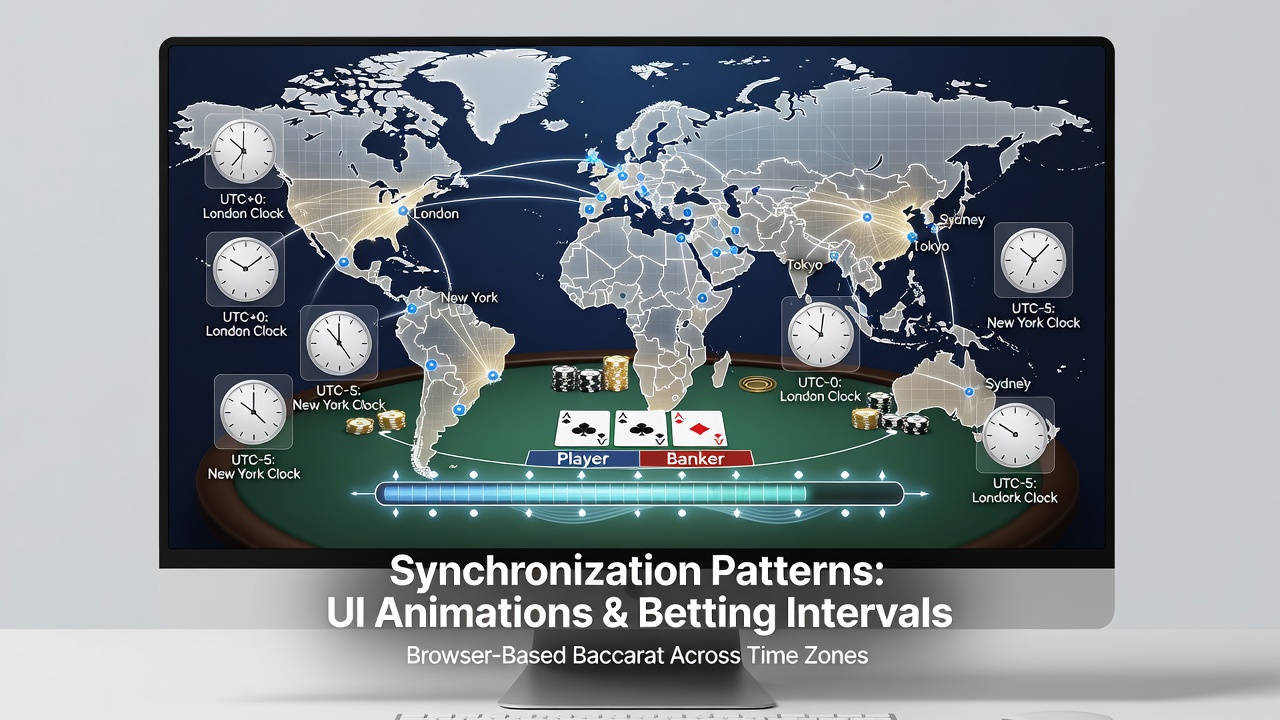
Exploring Synchronization Patterns Between User Interface Animations and Betting Intervals in Browser-Based Baccarat Sessions Across Different Time Zones
Browser-based baccarat platforms rely on precise timing between visual elements and player actions, and researchers have documented how interface animations align with betting windows that shift according to regional time zones. Data from platform logs indicates that card flip sequences and chip movement effects often complete within 800 to 1200 milliseconds, a window that coincides with the standard betting countdown displayed on screen. Observers note that these animations serve as visual cues that help maintain consistent pacing across sessions hosted on servers located in multiple geographic regions.
Core Elements of Animation and Betting Alignment
Platform developers configure animation durations to match the length of betting intervals, which typically range from 20 to 40 seconds depending on table settings. Studies conducted on cross-platform networks reveal that when animation sequences finish before the betting timer reaches zero, players receive an additional visual prompt such as a highlighted bet area or a subtle glow effect on the wager buttons. This coordination reduces instances of missed bets during peak traffic periods, and figures released by the Nevada Gaming Control Board in mid-2026 show steady growth in browser-based baccarat participation across Pacific and Atlantic time zones.
Time zone differences introduce variations in session start times and player density. Sessions originating from servers in Asia often see compressed betting intervals during evening hours in Europe, whereas North American players encounter extended timers during morning overlap periods. Research indicates that animation speed remains constant regardless of location, yet the perceived rhythm changes because of differing network latency and local connection quality.
Observed Patterns Across Major Time Zones
Analysis of session data collected through August 2026 demonstrates clear clustering of betting activity that corresponds to animation completion points. In the UTC+8 zone, for example, rounds frequently begin immediately after the final frame of the shoe-shuffle animation, creating a predictable rhythm that players adapt to within the first few hands. Meanwhile, sessions in the UTC-5 zone exhibit slightly longer pauses between animation end and the next betting prompt, a difference attributed to server load balancing across continental data centers.
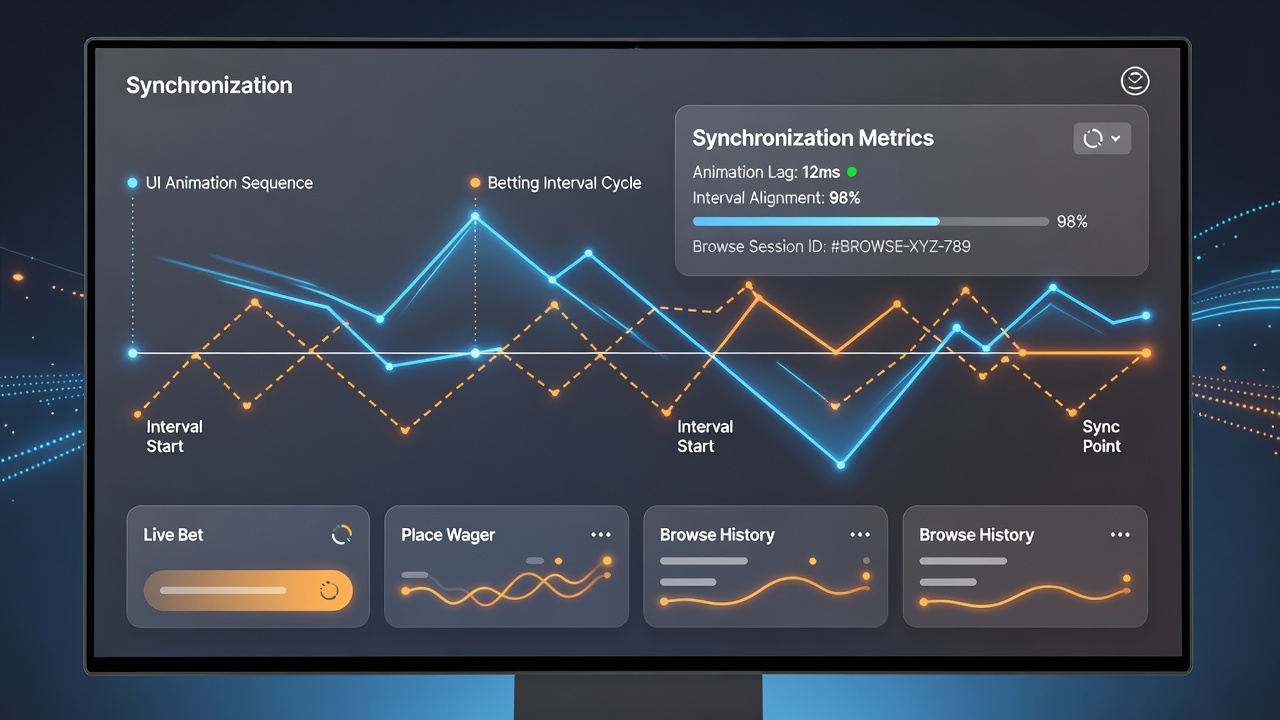
European Gaming and Betting Association reports from the same period document similar synchronization behaviors in multi-region deployments. When animation timing and betting countdowns fall out of alignment by more than 300 milliseconds, average bet placement rates drop by measurable margins, according to aggregated platform metrics. Developers address these discrepancies through dynamic adjustment scripts that recalibrate animation speed based on detected player location and current server load.
Technical Mechanisms Driving Synchronization
Modern baccarat interfaces employ client-side rendering engines that receive timestamped instructions from the game server. These instructions dictate both the duration of each animation and the exact moment the betting window opens. When a player connects from a distant time zone, the system calculates the offset and adjusts the visual sequence so that the final animation frame lands precisely at the start of the betting interval. This approach maintains consistency even when multiple players from UTC+2 and UTC-7 participate in the same virtual table.
Network diagnostics collected during high-traffic windows in August 2026 confirm that synchronization accuracy improves when platforms use content delivery networks positioned near major population centers. Latency spikes above 150 milliseconds, however, can cause the betting timer to advance before the animation completes, prompting some operators to implement buffer periods that extend the visible countdown by one or two seconds.
Data Trends and Platform Adjustments
Longitudinal tracking shows that synchronization precision correlates with session retention rates across regions. Tables that maintain tight alignment between animation endpoints and betting prompts record higher numbers of consecutive hands played, particularly during cross-zone rush hours when Asian and European players overlap. Industry reports highlight that minor tweaks to animation easing curves, such as slowing the final 200 milliseconds of a card reveal, produce measurable improvements in bet placement timing without altering the underlying game rules.
Regulatory documentation from the Casino Regulatory Authority of Singapore notes that operators must log animation and timer synchronization events for compliance audits. These records provide researchers with granular datasets that reveal how small timing variations accumulate across thousands of sessions spanning multiple continents.
Conclusion
Browser-based baccarat continues to evolve through incremental refinements in how visual feedback and betting mechanics interact across time zones. The patterns documented through platform analytics and regulatory filings demonstrate that consistent synchronization supports steady participation regardless of geographic location. As more operators adopt location-aware rendering techniques, the alignment between animations and betting intervals is expected to become even more precise in the coming periods.