23 May 2026
Examining Algorithmic Adjustments in Random Number Generators During Peak Holiday Traffic on Cross-Platform Slot Networks
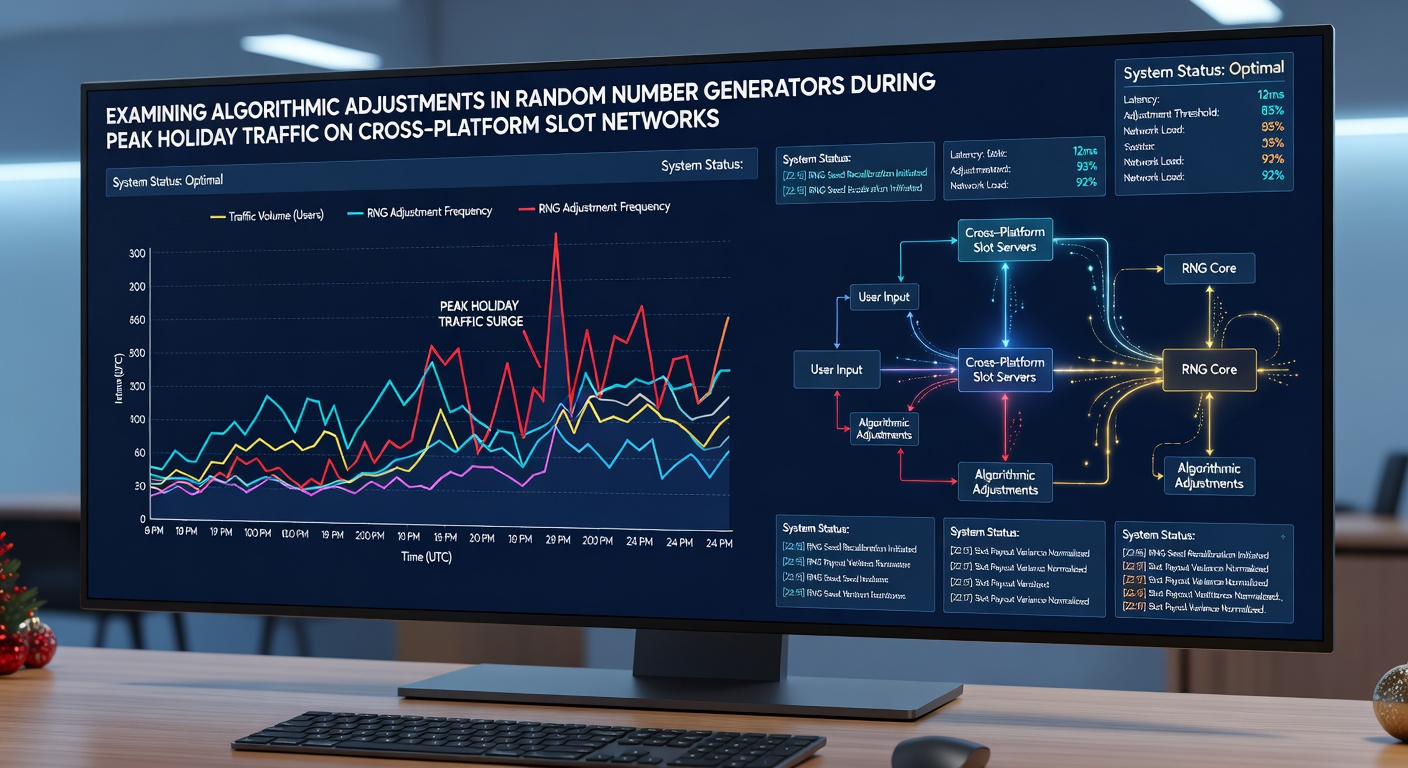
Cross-platform slot networks experience substantial increases in player activity during major holidays, and operators rely on random number generators to deliver outcomes across desktop, mobile, and in-casino terminals. These systems must process millions of spins per hour while preserving statistical randomness, which requires careful management of server resources and algorithmic parameters. Data from network operators shows traffic spikes that can exceed normal volumes by factors of three to five during peak periods such as Thanksgiving and Christmas weeks.
Core Mechanics of RNG Operation Under Load
Random number generators in regulated slot environments typically use cryptographic algorithms certified by independent testing laboratories, and these algorithms generate outcomes independently for each game instance. When traffic surges, the underlying hardware distributes requests across clustered servers; load balancers route sessions without altering the core randomness functions. Researchers have documented that seed initialization and entropy collection remain constant even as concurrent connections rise, because any deviation would violate certification standards set by bodies such as the Nevada Gaming Control Board.
Yet the infrastructure supporting these generators does undergo adjustments. Thread allocation, memory caching, and network queuing protocols receive dynamic tuning to prevent latency spikes that could otherwise interrupt game flow. Observers note that such tuning occurs at the system level rather than within the RNG logic itself, maintaining separation between performance optimization and outcome generation.
Observed Patterns During Holiday Periods
Traffic data collected from multi-jurisdictional operators reveals recurring patterns around holiday schedules. In December 2025, for instance, several networks reported daily spin volumes climbing steadily from early December and peaking between December 23 and 26. Similar trends appear in mobile traffic logs, where session lengths shorten but overall transaction counts increase because players often engage in shorter bursts between social activities.
Algorithmic adjustments focus on predictive scaling rather than outcome modification. Machine learning models trained on historical usage forecast demand hours ahead, allowing preemptive allocation of additional virtual machines. These models incorporate variables including time zone differences, promotional calendars, and weather disruptions that affect player availability. When forecasts prove accurate, response times stay within acceptable thresholds and RNG calls experience no measurable queuing delays.

Regulatory and Technical Safeguards
Regulatory frameworks require continuous monitoring of RNG performance regardless of traffic volume. The Alcohol and Gaming Commission of Ontario mandates real-time logging of entropy sources and periodic statistical audits that compare live distributions against expected probabilities. Similar requirements exist in other markets, ensuring that any systemic deviation would trigger immediate investigation and potential suspension of affected games.
Cross-platform synchronization adds another layer of complexity. A single player account accessing slots on both a mobile app and a browser-based client must receive independent RNG streams for each device session. Operators achieve this through centralized authentication paired with localized RNG instances, and holiday traffic tests the robustness of these distributed architectures. Reports from industry testing labs indicate that properly configured systems maintain fairness metrics within certified tolerances even under sustained high load.
Emerging Developments Scheduled for 2026
Standards updates planned for May 2026 will introduce enhanced requirements for real-time entropy verification across distributed networks. These updates, developed through collaboration between European and North American regulators, emphasize automated anomaly detection that flags deviations in randomness quality before they affect player outcomes. Operators have begun preparatory work, including upgrades to hardware security modules and revised logging protocols that capture additional metadata during peak periods.
Academic studies examining similar systems have contributed to these preparations. A 2024 paper from a Canadian university research group analyzed RNG behavior under simulated traffic loads equivalent to holiday volumes and found no statistical bias when proper isolation between load management and randomness functions was maintained. Such findings reinforce the separation of concerns that current certification processes already enforce.
Conclusion
Examination of RNG behavior during peak holiday traffic demonstrates that algorithmic adjustments occur primarily at the infrastructure layer, leaving the certified randomness mechanisms intact. Regulatory oversight, combined with technical safeguards and upcoming 2026 standards, continues to enforce statistical integrity across cross-platform environments. Data collected during successive holiday cycles provides operators and regulators with increasingly refined models for maintaining performance without compromising fairness requirements.