Device Battery Thresholds and Risk Choices in Spontaneous Mobile Casino Sessions
Viktor Simon · Jul 30, 2026
Device Battery Thresholds and Risk Choices in Spontaneous Mobile Casino Sessions
Spontaneous mobile casino sessions often begin without advance planning, and device battery levels play a measurable role in how those sessions unfold. Players frequently open casino applications during brief windows of downtime, and battery status can shift from a background concern to a factor that shapes betting patterns once power drops below certain thresholds. Research from multiple regions shows that mobile users tend to adjust session length and wager size when their devices reach 20 percent or lower remaining charge.
Battery Thresholds Observed in Mobile Gambling Data
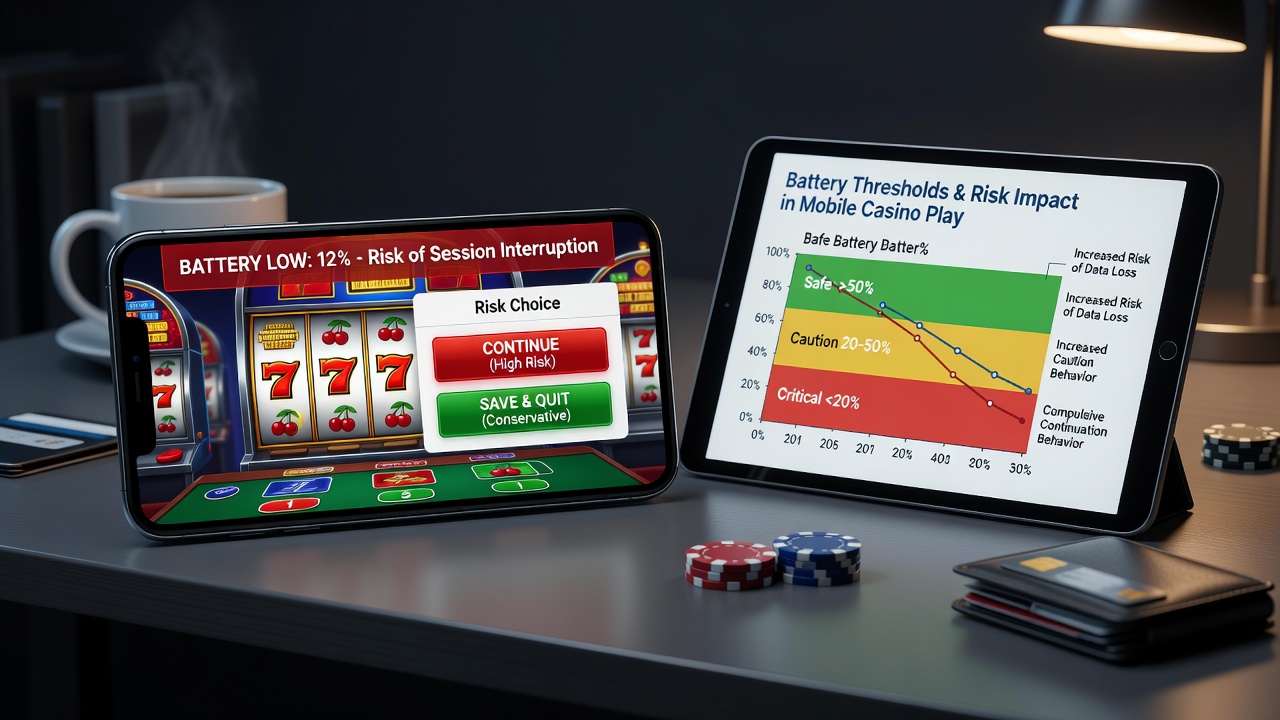
Analyses of app usage logs indicate that sessions initiated at full battery often continue past the 30-minute mark, whereas those started near 15 percent charge average closer to 12 minutes before users either close the app or switch to power-saving modes. Figures released by the Australian Gambling Research Centre in 2025 documented similar patterns across Android and iOS platforms, noting that battery warnings triggered at 20 percent correlated with accelerated decision-making sequences in roulette and slot games. Those same datasets revealed that players who received low-battery alerts mid-session increased average bet sizes by roughly 18 percent compared with earlier portions of the same session.
Power-management features built into modern smartphones add another layer. When devices enter low-power states, processor speeds drop and network latency can rise, which in turn affects how quickly game results appear. Observers tracking cross-platform behavior have recorded instances where players responded to these delays by placing larger follow-up bets rather than waiting for confirmation screens to refresh.
Spontaneous Session Formation and Risk Adjustment
Spontaneous play commonly occurs during commutes, waiting periods, or brief breaks, and battery drain accelerates under these conditions because screen brightness stays elevated and background processes remain active. Data collected through industry telemetry shows that sessions begun with less than 40 percent charge more often involve higher-volatility games, as users appear to compress entertainment value into shorter windows. One longitudinal review covering the first half of 2026 found that the proportion of high-volatility slot selections rose from 34 percent at 80 percent battery to 51 percent once devices crossed the 15 percent mark.
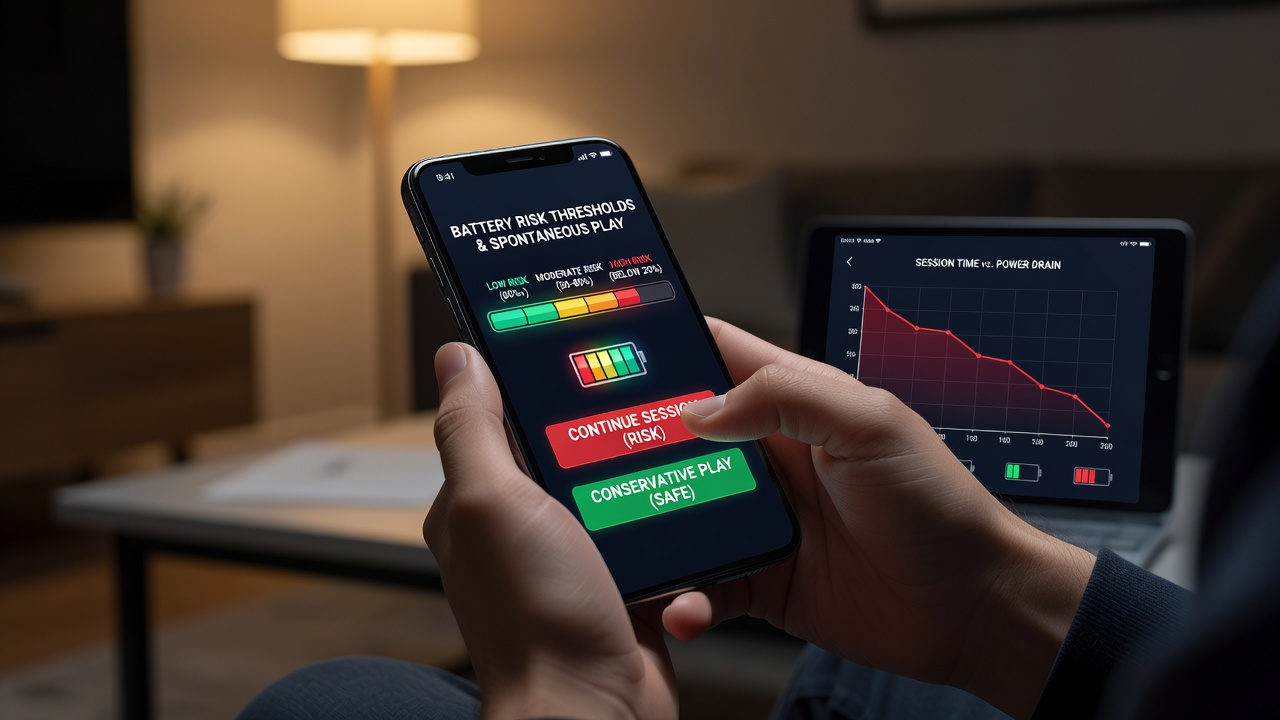
July 2026 updates to several major mobile operating systems introduced more aggressive battery optimization routines that further shortened available play windows. Developers responded by adding optional quick-exit buttons that preserve game state, yet usage statistics indicate these features see higher activation rates precisely when battery warnings appear. The result is a measurable clustering of larger wagers in the final minutes before users either connect chargers or terminate sessions.
Geographic and Platform Variations in Battery-Related Behavior
Regional differences emerge when battery thresholds interact with local network conditions and device preferences. In markets where 5G coverage remains patchy, such as parts of rural Canada, players report extending sessions longer on lower battery because reconnection attempts consume additional power. The Canadian Centre on Substance Use and Addiction published findings in early 2026 that linked these reconnection loops to elevated session totals among users who started play at under 25 percent charge. Meanwhile, European regulatory summaries from the same period noted that iOS users in urban centers exhibited sharper bet-size increases near the 10 percent threshold than Android users in the same cities.
Payment method choices also intersect with battery status. E-wallet transactions that require additional authentication steps tend to be avoided once devices near critical power levels, leading to greater reliance on stored card details or in-app balances. Industry reports compiled by the Nevada Gaming Control Board for the 2025-2026 fiscal year recorded a 12 percent uptick in stored-balance usage during periods when average device battery across sampled sessions fell below 18 percent.
Technical Factors and App Design Responses
Casino applications increasingly incorporate battery-aware design elements, such as reduced animation loads and simplified result displays, once device APIs report low power. These adjustments can alter the visual feedback players receive, which some studies connect to changes in perceived game pace. Researchers at the University of Sydney's Gambling Treatment Clinic examined how simplified interfaces influence bet sizing and found that players using battery-optimized modes placed consecutive wagers more rapidly than those on standard display settings.
Network handoff between Wi-Fi and cellular data further complicates the picture, because switching radios draws extra power and can coincide with battery warnings. When these handoffs occur near the 15 percent mark, session data shows a temporary spike in smaller, more frequent bets before users either stabilize the connection or exit. Such patterns appear consistently across multiple operator datasets released in mid-2026.
Conclusion
Battery thresholds function as observable markers that coincide with shifts in session duration and wager patterns during unplanned mobile casino activity. Available usage statistics, regulatory summaries, and academic examinations collectively document these associations across different platforms and regions. As operating systems and applications continue to refine power-management features, the relationship between remaining charge and player decision sequences remains a measurable component of spontaneous mobile gambling behavior.