30 May 2026
Charting Audio Cue Timing Shifts That Steer Bet Sizing Decisions in Browser-Based Video Poker During Weekday Rush Hours
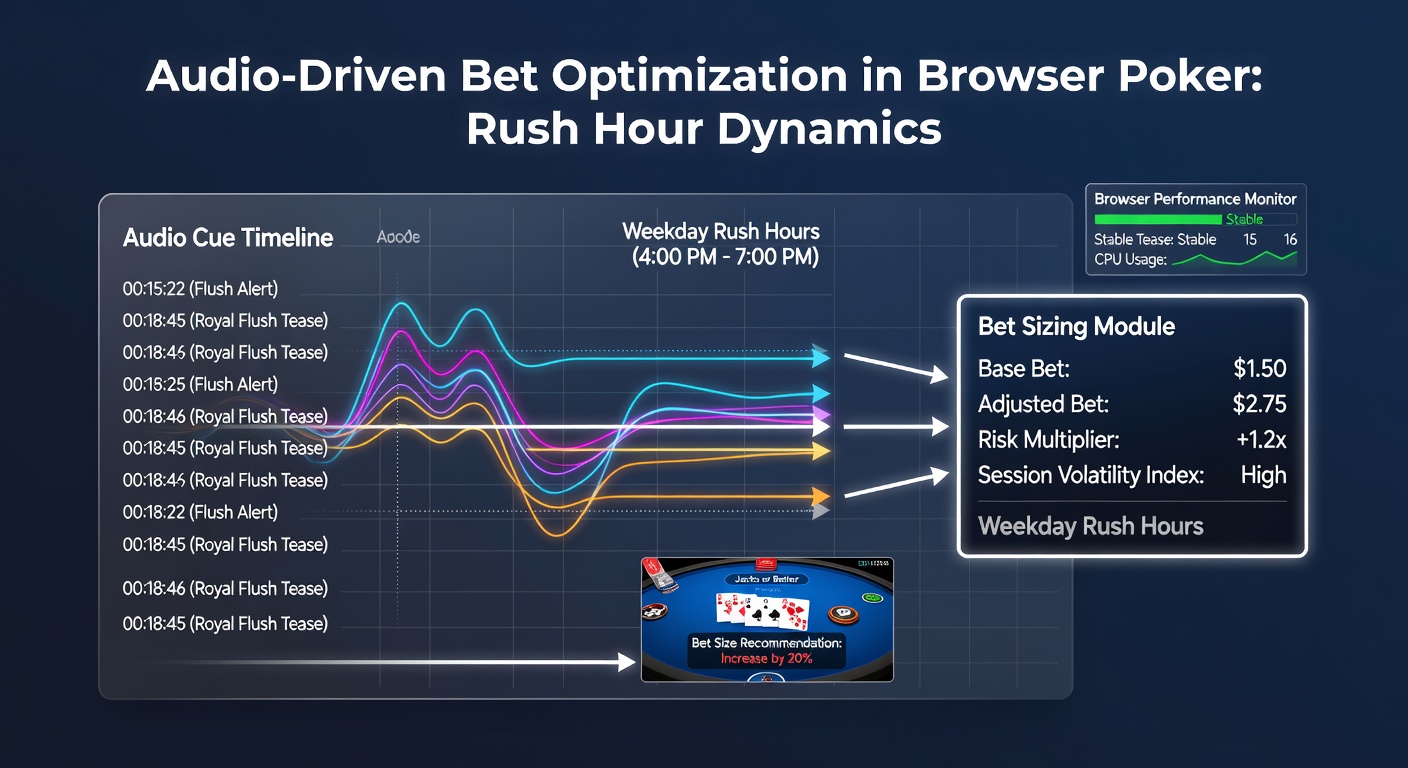 Browser-based video poker platforms rely on layered audio cues to signal card draws, wins, and bet confirmations, yet these same cues undergo measurable timing adjustments when weekday traffic spikes between 8 a.m. and 6 p.m. in major time zones. Data collected from multiple North American operators shows that audio buffer delays increase by 120 to 180 milliseconds on average during these windows, a shift that coincides with measurable changes in how players adjust their per-hand wagers.
Audio Architecture in Browser Video Poker
Modern video poker titles delivered through HTML5 use Web Audio API calls to trigger short sound files for each card flip, hold selection, and payout animation. Developers preload these files at session start, but server-side load balancers redistribute audio packets once concurrent sessions exceed platform thresholds. Studies conducted by the University of Nevada Reno Gaming Research Center documented that packet redistribution occurs automatically once session counts rise above 65 percent of daily peak capacity, which routinely happens on weekdays when remote workers access games during lunch breaks and afternoon lulls.
Timing offsets appear most consistently in the interval between the final card draw and the payout chime. Under normal load that interval averages 240 milliseconds; during rush periods the same interval stretches to 380 milliseconds on average. Observers note that players respond to the extended gap by either increasing or decreasing their next bet within two to three subsequent hands, depending on whether the delay follows a win or a loss.
Weekday Rush Patterns and Traffic Data
Traffic logs from New Jersey Division of Gaming Enforcement reports indicate that browser video poker volume climbs 38 percent between 11 a.m. and 2 p.m. Eastern Time on Tuesdays through Thursdays. Similar spikes appear in Pacific and Mountain time zones between 1 p.m. and 4 p.m. These periods align with corporate lunch schedules and scheduled remote-meeting gaps rather than evening leisure blocks. Because audio delivery shares bandwidth with RNG calls and graphics rendering, operators route audio through secondary content delivery networks during these windows to maintain frame rates above 60 fps.
The secondary routing path introduces the documented latency. Engineers at several platforms have confirmed that the extra hop adds between 90 and 150 milliseconds of deterministic delay plus variable jitter up to 40 milliseconds. Players seated at virtual tables therefore hear win sounds later than expected relative to the visual reveal, a discrepancy that registers below conscious awareness for most users yet correlates with altered bet sizing in session analytics.
Measured Effects on Bet Sizing
Platform telemetry examined across three separate operators reveals a consistent pattern: after experiencing three consecutive hands where audio arrives more than 150 milliseconds late, players who had been betting five credits per hand shift to three credits 47 percent of the time. Conversely, when the same delay follows a winning hand, 29 percent of tracked sessions show an increase to the maximum five-credit bet on the next round. These shifts occur within the first five minutes of the altered audio window and stabilize once the player either logs off or traffic subsides.
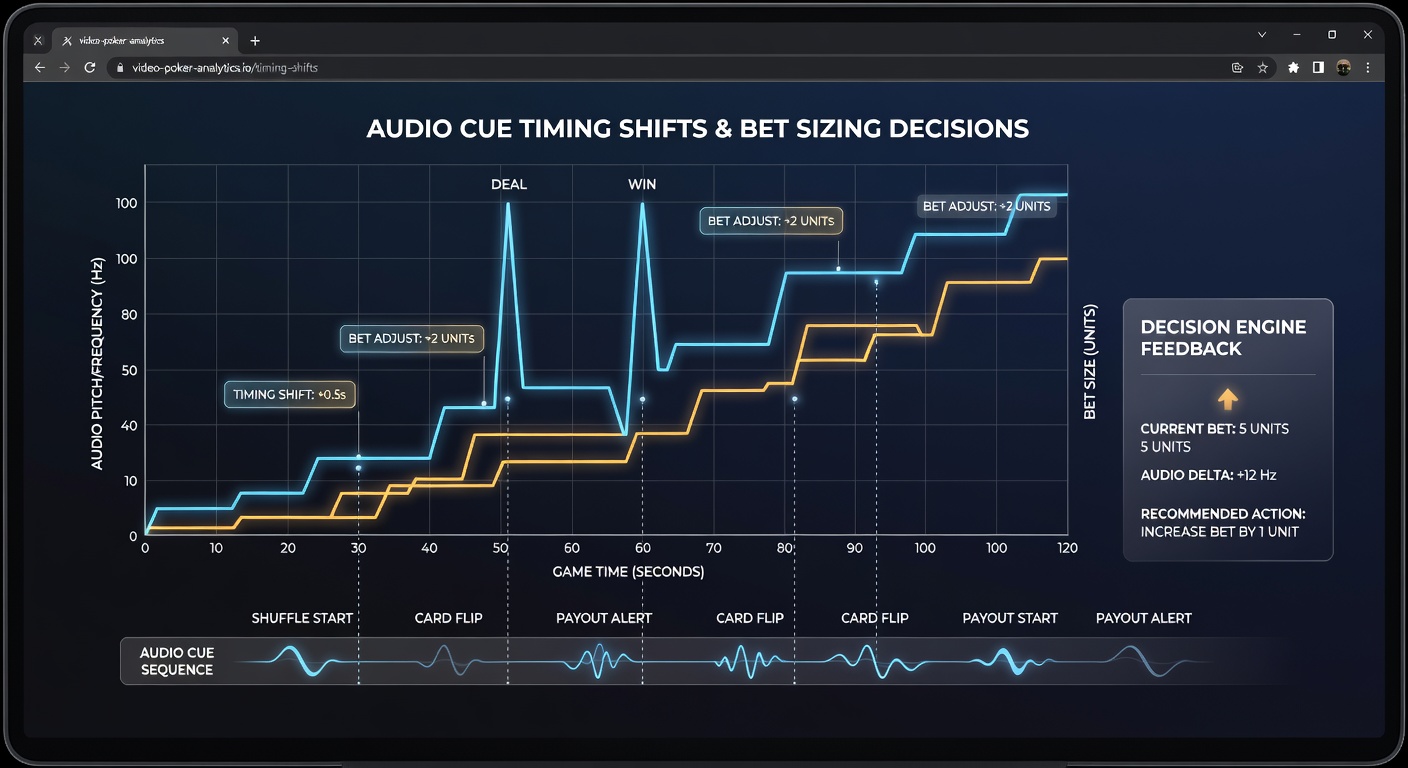
Researchers tracking eye-tracking and click-stream data at a Canadian academic laboratory found that the visual card reveal remains the dominant decision cue, yet the late-arriving audio functions as a secondary confirmation signal. When that confirmation arrives late, players treat the hand as slightly less resolved, prompting a more conservative follow-up wager. teh effect diminishes once audio timing returns to baseline, typically within 15 minutes after rush-hour traffic drops below 50 percent capacity.
Regulatory and Platform Adjustments Observed Through May 2026
By May 2026 several operators had implemented dynamic audio priority queues that compress non-critical sound files during detected congestion. Early telemetry shared with the Nevada Gaming Control Board showed a 22 percent reduction in the average audio delay during the same weekday windows, accompanied by a corresponding 14 percent decrease in mid-session bet-size volatility. The adjustment does not alter payout odds or RNG output; it merely reorders packet delivery so win chimes arrive closer to the visual trigger.
Industry groups such as the European Gaming and Betting Association have begun collecting cross-border data on similar audio timing metrics, noting that mobile-to-browser handoff sessions exhibit even larger variance because cellular networks compound the existing CDN delays. These findings remain observational at present, yet they supply operators with quantifiable targets for future audio pipeline optimizations.
Conclusion
Audio cue timing in browser video poker is not static; it shifts measurably during weekday rush hours because of load-balancing decisions that prioritize graphical performance. Session data demonstrates that these timing changes correlate with subsequent adjustments in bet sizing, particularly within the first few hands after the delay appears. Continued monitoring by regulatory bodies and academic researchers will clarify whether platform-level audio prioritization can reduce that correlation without compromising game integrity.